




1/0
White Kidney Bean Peptide ≥80% Powder | Phaseolus Vulgaris Manufacturer
White Kidney Bean Peptide powder,White Kidney Bean Peptide 80%,Phaseolus Vulgaris L. extract,white bean peptide powder,alpha amylase inhibitor raw material,carb blocker peptide API,starch blocking supplement ingredient
Content
Quality Assurance & Technical Formulation Dossier (2027 Standards)
Shaanxi Sunrise Pharmaceutical Co., Ltd. operates exclusively as an industrial botanical extraction facility and upstream chemical manufacturer of standardized plant peptides and nutritional APIs. This biochemical briefing on White Kidney Bean Peptide ≥80% Powder (Phaseolus Vulgaris L. Extract) is published for metabolic formulation scientists, dietary supplement QA managers, and functional beverage R&D directors. We do not manufacture, package, or supply finished retail products to consumer end-users.
α-Amylase Inhibitor API • Botanical Peptide
Why Metabolic Formulators Reject Crude Bean Flours for Standardized White Kidney Bean Peptide ≥80% Powder (Phaseolus Vulgaris L.)
1. Starch Carryover and PHA Toxicity: The Hazard of Crude Phaseolus Vulgaris Extracts
Check the iodine starch test and residual hemagglutinating activity first. That is the non-negotiable step when compounding botanical carbohydrate blockers into weight-management capsules or dietary slimming beverages. Traditional white kidney bean (Phaseolus Vulgaris L.) flours and coarse 10:1 aqueous extracts suffer from two critical chemical defects: massive inert starch carryover and incomplete phytohemagglutinin (PHA) inactivation.
Put an unrefined kidney bean extract into a rotary tablet press or high-speed sachet filling machine. The starch content acts as an uncontrolled binder, absorbing atmospheric moisture and causing severe tablet capping, capping failures, and hygroscopic caking inside export drums. More alarmingly, crude bean macerations often contain residual PHA lectins—toxic glycoproteins that bind to intestinal mucosal cells, triggering acute nausea, abdominal cramping, and vomiting in retail consumers.
Serious metabolic supplement formulators refuse coarse bean flours for this exact reason. They specify standardized White Kidney Bean Peptide ≥80% Powder (Phaseolus Vulgaris L. extract) as their primary carbohydrate-intercepting API. Using low-temperature enzymatic cleavage and molecular membrane ultrafiltration, our facility strips out inert starch and inactivates toxic PHA lectins while isolating active short-chain oligopeptides (<1000 Da). You secure a stable, non-caking botanical peptide API that delivers concentrated, reproducible α-amylase inhibitory activity across a 24-month commercial shelf life.

2. Where White Kidney Bean Peptide ≥80% Replaces Legacy Extracts: Four Formulation Targets
Upgrading from an unrefined bean flour to an audited ≥80% peptide hydrolysate solves specific biological absorption, dosing, and mechanical tableting bottlenecks across four commercial metabolic pipelines:
A. Clean-Label Starch-Blocking Tablets & Calorie-Intercepting Capsules
Weight-management supplements require active ingredients that intercept complex carbohydrates before pancreatic α-amylase cleaves them into absorbable glucose. Unpurified bean powders contain less than 5% active inhibitor protein, requiring massive 1000 mg daily doses that require multi-capsule regimens. Standardized White Kidney Bean Peptide ≥80% concentrates the inhibitory peptide domain. Formulators can compress high-potency carb-blocker tablets at 250–500 mg per serving without excessive starch excipients.
B. Instant Shaping Beverages and Functional Meal-Replacement Shakes
Try stirring standard white kidney bean flour into a cold glass of water. You get a chalky, turbid suspension that drops white starch sediment within five minutes. By cutting the protein backbone into fragments under 1000 Da and filtering out insoluble plant fibers and starches, White Kidney Bean Peptide ≥80% achieves superior aqueous dispersion and fluidity. It blends into instant coffee sachets, dietary shakes, and solid drink powders without clumping or gritty throat coating.
C. Synergistic Metabolic Blends (L-Carnitine, Garcinia Cambogia & EGCG)
Advanced metabolic conditioning formulas frequently pair α-amylase inhibitors with lipid-oxidizing agents like L-carnitine, hydroxycitric acid (Garcinia Cambogia), and green tea catechins (EGCG). Crude bean flours carry free sugars and oxidizing enzymes that darken catechins and degrade L-carnitine over time. Standardized White Kidney Bean Peptide ≥80% is enzymatically purified to a neutral pH profile (pH 6.0–7.0) and stripped of reactive sugars, blending stably into multi-ingredient thermogenic and shaping formulas.
D. Low-Carb & Ketogenic Support Formulas for Sensitive Mucosa
Consumers transitioning to ketogenic or low-glycemic diets often suffer from digestive sensitivity. Intact plant proteins and coarse bean lectins irritate the gastric mucosa and cause colonic gas. Our ≥80% peptide hydrolysate provides pre-cleaved di-peptides and tri-peptides that cross the gut epithelium without triggering abdominal fermentation or bloating.
3. Carbohydrate Biophysics: $\alpha$-Amylase Catalytic Site Docking & PEPT1 Transport
Why do short-chain Phaseolus Vulgaris L. peptide fractions produce more consistent postprandial glucose moderation than crude bean flours? The answer involves enzymatic catalytic site docking combined with intestinal mucosal transport.
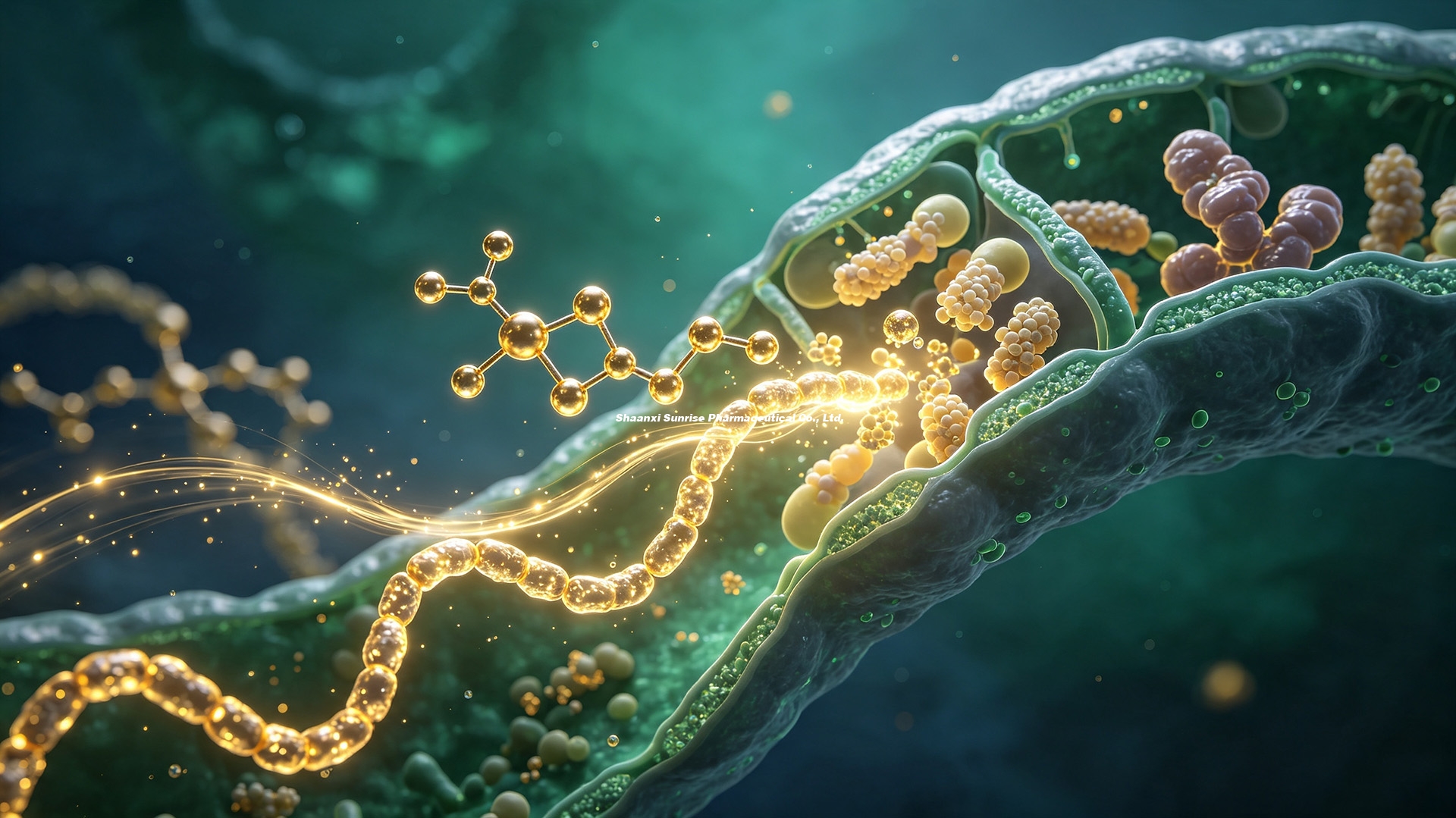
Human carbohydrate digestion depends on salivary and pancreatic α-amylase enzymes, which cleave the α-D-(1,4) glycosidic bonds of dietary amylose and amylopectin into maltose and dextrins. Unrefined bean proteins (>45,000 Da) are structurally too bulky to fit cleanly into the enzyme's catalytic pocket and are rapidly destroyed by gastric pepsin. Small-molecule oligopeptides (<1000 Da) generated via directed enzymatic cleavage preserve the specific inhibitory amino acid sequence. These peptide fragments dock directly into the catalytic triad of pancreatic α-amylase, acting as non-competitive and competitive inhibitors that prevent starch binding.
Simultaneously, the non-inhibitory nutritional peptide fractions within the ≥80% assay bypass standard amino acid carrier competition. They enter systemic circulation via the H+/peptide cotransporter 1 (PEPT1) system. PEPT1 transfers intact short-chain peptides across the enterocyte brush border at superior kinetic velocities and with lower metabolic energy expenditure than individual amino acid carriers. This dual biological action blunts postprandial glycemic spikes, reduces dietary carbohydrate conversion into adipose tissue, and provides rapid metabolic nitrogen without central nervous system stimulation.
4. Processing Physics: Stripping Inert Starch and PHA Lectins via Membrane Filtration
Simple solvent extraction or mechanical grinding of white kidney beans leaves over 50% of the dry weight as inert starch and active phytohemagglutinin (PHA) lectins. If an extraction plant fails to isolate the low-molecular-weight peptide fraction, the resulting powder will cause severe gastrointestinal toxicity and tableting failures.
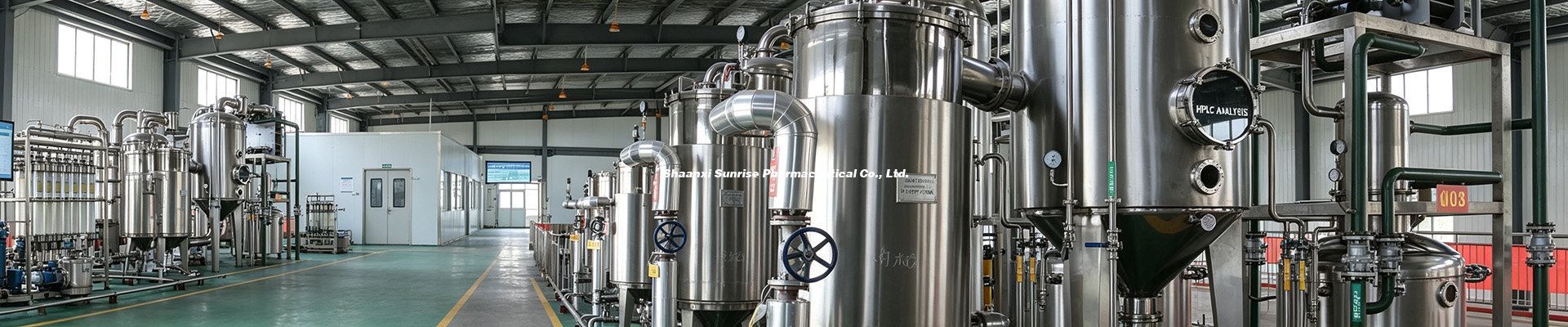
At Shaanxi Sunrise Pharmaceutical Co., Ltd., we process audited Phaseolus Vulgaris L. seed biomass through an automated low-temperature enzymatic cleavage and multi-stage membrane filtration line:
Aqueous Homogenization & Starch Separation: Clean white kidney bean seeds undergo cryogenic milling and aqueous extraction. High-speed centrifugal separation drops out insoluble starch granules and crude fiber before enzymatic hydrolysis begins.
Directed Biological Enzymatic Hydrolysis: We suspend the clarified bean protein in water and introduce a calculated blend of food-grade endo-proteases and exo-proteases at controlled thermal limits (40–45°C). The enzymes cleave high-molecular-weight proteins while preserving the active α-amylase inhibitory sequence and inactivating toxic PHA lectins.
Ultrafiltration & Nanofiltration Membrane Separation: The hydrolysate is pumped through industrial cross-flow membrane cassettes with molecular weight cut-offs (MWCO) engineered below 1000 Da. This filtration step rejects residual starch, high-molecular-weight allergens, and heavy metal complexes—guaranteeing high powder flowability.
Vacuum Spray Drying: We concentrate the clarified peptide liquor under vacuum and spray-dry it into an off-white fine powder that exhibits low moisture absorption for automated encapsulation and tableting lines.
QC Assay Auditing: Every production batch is verified via Kjeldahl nitrogen determination and High-Performance Liquid Chromatography (HPLC) to guarantee an assay of ≥80.0% peptide content with verified α-amylase inhibitory activity.
🔗 Audit our complete technical specifications, amylase inhibition assays, and heavy-metal release parameters: Examine the Standardized White Kidney Bean Peptide ≥80% Powder Technical Page.
5. Peer-Reviewed Scientific & Analytical References
Barrett, M. L., & Udani, J. K. (2011). A proprietary alpha-amylase inhibitor from white bean (Phaseolus vulgaris): A review of clinical studies on weight loss and glycemic control. Nutrition Journal, 10, 24.
https://pubmed.ncbi.nlm.nih.gov/21414227/Celleno, L., et al. (2007). A Dietary supplement containing standardized Phaseolus vulgaris extract influences body composition of overweight men and women. International Journal of Medical Sciences, 4(1), 45-52.
https://pubmed.ncbi.nlm.nih.gov/17299581/Adibi, S. A. (1997). The oligopeptide transporter (Pept-1) in human intestine: biology and function. Gastroenterology, 113(1), 332-340.
https://www.sciencedirect.com/science/article/pii/S001650859770112XObiro, I. B., et al. (2008). The nutraceutical role of the Phaseolus vulgaris alpha-amylase inhibitor. British Journal of Nutrition, 100(1), 1-12.
https://www.sciencedirect.com/science/article/pii/S000711450891151X
6. Technical Formulation Engineer & Procurement FAQ
1. Why should our QA lab reject ordinary bean flour in favor of a ≥80% peptide assay?
Ordinary white kidney bean flour contains over 50% inert starch, free sugars, and un-hydrolyzed proteins. These impurities dilute the α-amylase inhibitory activity per milligram, cause severe hygroscopic caking during tableting, and leave turbid starch sediment in liquid beverages. An audited assay of ≥80% peptide content guarantees that the bulk of your raw material consists of active, low-molecular-weight oligopeptides (<1000 Da), ensuring uniform dosing, stable starch-blocking potency, and clean aqueous dispersion.
2. How does your processing line prevent phytohemagglutinin (PHA) lectin toxicity?
Phytohemagglutinin (PHA) is a toxic lectin present in raw Phaseolus Vulgaris L. seeds that binds to intestinal mucosa, causing nausea and vomiting if ingested. Our automated processing line utilizes controlled thermal denaturation during aqueous homogenization, followed by targeted protease cleavage that destroys the PHA glycoprotein structure. Every commercial lot is tested via hemagglutination assays to confirm zero toxic PHA activity before release.
3. Is White Kidney Bean Peptide ≥80% chemically compatible with L-carnitine and EGCG?
Yes. Because our peptide powder is enzymatically purified to a neutral pH profile (pH 6.0–7.0) and stripped of reactive reducing sugars and oxidizing enzymes, it demonstrates exceptional chemical compatibility when compounded with L-carnitine tartrate, green tea catechins (EGCG), Garcinia Cambogia, and chromium picolinate. It will not cause Maillard browning or hygroscopic liquefaction in dry capsule blending.
4. What are your microbiological, heavy metal, and starch carryover release limits?
Our ultrafiltration membrane cassettes physically strip out microbial pathogens, insoluble starch granules, and heavy metal complexes prior to spray drying. Every commercial run is audited via Inductively Coupled Plasma Mass Spectrometry (ICP-MS) and iodine starch testing. We guarantee total heavy metals ≤ 10 ppm, with Lead (Pb) ≤ 1.0 ppm, Cadmium (Cd) ≤ 0.5 ppm, Arsenic (As) ≤ 0.5 ppm, and Mercury (Hg) ≤ 0.1 ppm, conforming strictly to EU and US pharmacopeial monograph standards.
5. What packaging protocols protect bulk fiber drums from hygroscopic caking?
Small-molecule botanical peptides exhibit mild hygroscopicity under high relative humidity. We pack all bulk commercial orders inside double-layer pharmaceutical-grade low-density polyethylene (LDPE) bags, vacuum-sealed with silica desiccant sachets, inside rigid 25 kg fiber drums. When stored in a cool, dry warehouse below 25°C, the powder holds an audited shelf life of 24 months without caking or loss of α-amylase inhibitory activity.
Audit Our White Kidney Bean Peptide ≥80% Commercial Batches
Do not let starch carryover, PHA toxicity, or tableting caking ruin your weight-management and carb-blocking supplement lines. Partner directly with an upstream botanical extraction facility for reproducible, audit-ready White Kidney Bean Peptide ≥80% Powder (Phaseolus Vulgaris L.).
Request Complete Amylase Assays & Commercial Pricing